A malignant, monomaniacal president, deeply unpopular, faces an election that could restrict his power and end his domination of his country.
It is true that, to influence the outcome, he counts on a supine supreme court and his ability to legislate through executive decrees, as well as an onslaught of fake news accusing his opponents of being unpatriotic communists, true that he has colossal financial support from an entrenched oligarchy that has thrived thanks to his rightwing neoliberal policies, true that he has gone out of his way to limit the freedom of those who vote and true that he has absolute command of the armed forces.
None of this seems sufficient to deter an electorate that is tired of his reign and determined, despite widespread intimidation, to make itself heard. Even as the polls indicate a rout, the delusional strongman, emboldened by sycophants and fawning courtiers too afraid to inform him the facts, refuses to accept that the upcoming referendum will go against his divinely inspired will.
Donald Trump in 2026?
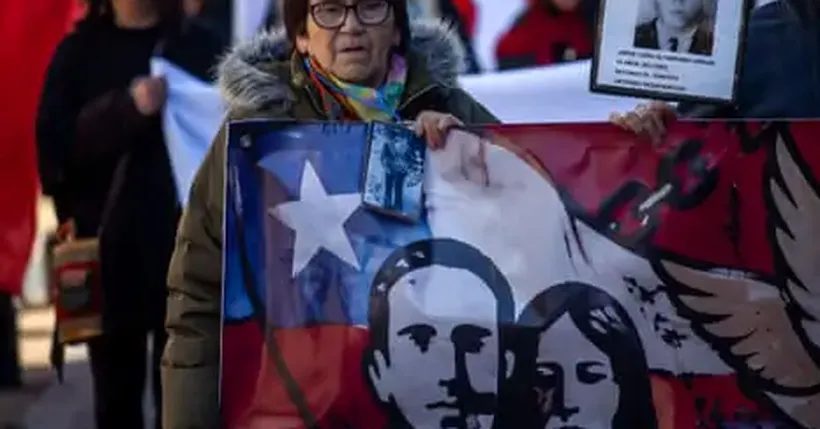
In fact, I was also describing the dictator of Chile, the Gen Augusto Pinochet, in October of 1988, when he insisted that he would win a plebiscite which would decide whether he remained as head of state for another eight years (and probably well beyond) or whether a transition to democracy should begin. On 5 October of that year, the military autocrat who had misgoverned Chile since ousting the democratically elected president Salvador Allende in a 1973 coup, resoundingly lost, with 55.9 % of his compatriots telling him to retire.
He did not go easily.
I was there, that night, as the results poured in verifying that the regime was being repudiated, I was there when the vote count was suspended and an informational blockade was established at 10pm; I was there, in front of the presidential palace in Santiago, when, at around 1am of 6 October, the Air Force Gen Fernando Matthei, a member of the junta, recognized publicly that the “no” vote had clearly won, thwarting an auto-coup that Pinochet was contemplating at that very moment.
These events have a significant bearing on the United States as the 3 November midterms approach and with them, a dire uncertainty: can the majority of Americans, by winning both chambers of Congress, constrain the ravings and corruption of a wannabe autocrat who is as unhinged today, and contemptuous of the law, as Pinochet was back then?
That Chilean October should serve, at this existential moment, as a way to encourage and inspire those who won’t let their voices be silenced. No matter how much supremacy, no matter how many resources deployed by a deranged chief executive, no matter the fear and funds and lies at a powerful ruler’s disposal, he can be beaten if courageous people are resolute and smart enough.
And Chile, in effect, subsequently transitioned to democracy, electing a center-left president in 1990 and, since then, an uninterrupted series of presidents of different ideological strains and policies.
But that October 1988 milestone in Chile also entails warnings for those who believe it is possible to limit Donald Trump’s authoritarian tendencies.
Just as Pinochet intended to disavow the results that were ousting him, the current occupant of the White House could try to do something similar – maneuvers that would far outdistance his violent and illicit attempts to annul his loss in the 2020 elections.
Only heightened civilian and institutional vigilance, the daily epic of everyday people resisting – and patriotic armed forces unwilling to obey illegal dictatorial orders – can guarantee, as in Chile, that such a potential assault on democracy will fail.
That will not be enough. Ridding Chile of its strongman saved it for democracy, but did not undo the vast damage he did to the country. He kept mutilating it grievously during the year and a half left in his mandate and then for another eight years as a threatening commander-in-chief of the army.
But more insidious was how he permanently changed Chilean society. Not just the dismantlement of the welfare state created by decades of struggle, replaced by a savage capitalism that did not care how much pain it inflicted or who was left defenceless. Worse perhaps was how the spreading of fear and mistrust affected the psyche of the country, sickened its soul.
Indeed, despite major advances in reversing Pinochet’s long legacy, his shadow still looms over Chile.
Despite the dictator’s appalling record of disappearances, torture, exile and persecutions, José Antonio Kast, an admirer of Pinochet who would like to pardon the agents of the dictatorship imprisoned for gross violation of human rights, is now Chile’s president.
His victory in December of 2025 can be partly explained by an economically distressed populace falling for his rabidly anti-immigrant platform and vows to deal with a narco crime wave that has shaken the country. Nonetheless, the fact that a whopping 56 % of voters were willing to turn a blind eye to Kast’s denial of past atrocities is a cause for long-term concern and, in my case, of mourning.
It is disturbing to witness the erosion, perhaps the funeral, of the dream that once was Chile, a land of solidarity and thirst for justice and dignity that enthralled me when I arrived there as a lad of 12 in the winter of 1954. So strong was that enthrallment that I never doubted, during the eternal night of the dictatorship, that it would resurrect and, in effect, on 5 October 1988, thanks to so many Chileans who suffered and fought for it, that fearless, hopeful country proved it was alive, an indispensable stepping stone towards an indefinite future.
Something went wrong.
Maybe that is why I force myself to wonder, in this other promising and foreboding October, if we are aware in this other country, the United States, that is also mine, how much long-lasting harm have the Trump years wrought?
I ask this because back in October 1988, the democratic militants of Chile, carried away by the glorious illusion that the dawn of a new era was upon us, did not then fully deal with the vexing question of how such a monster could have arisen in our midst.
It was a public and private task, both intellectual and emotional, that enough Chilean men and women, given the triumphant return of a Pinochet fanatic to lead their country, have still not sufficiently grappled with collectively: what mistakes did we originally make to facilitate the existence of such a despicable and enduring regime and, most crucially, what could we have done better, what must we do better in the coming years?
My adopted US homeland should be wary of making the same mistakes.
Though the electorate at this moment is sensibly focused on achieving a victory that will grant some reprieve and solace, such an urgency should not postpone the need for an overdue reckoning with the dark imperfections in our history and national character that generated the conditions for the republic to be in such dire peril.
Those conditions, enabled by those who enabled Trump and ignored his danger, his nastiness, his serial mendacity, will probably endure well beyond the day (if it comes) when he leaves the White House. We will be left to contend with the worst traits of the US’s past that he exalted and exacerbated: the imperial arrogance, the nativism and misogyny, the ecological degradation, the assault on minority and workers’ rights, the myth of exceptionalism.
That is the somber lesson that Chile yesterday and today whispers to us from afar. Only a profound and painful self-examination of our identity, what the splendid guardians of this experiment that started 250 years ago are demanding, can help to stave off the ominous possibility that years from now the country will be facing a repetition of the current terrifying crisis.
By then, it may be too late.
-
Ariel Dorfman is the Chilean American author of Death and the Maiden and the novels The Suicide Museum and Allegro, and the forthcoming collection of stories, What She Saw
Other News

Germany Arrests Former Domestic Intelligence Chief over Alleged Spying
I Witnessed the Pinochet Regime’s Fall. It Offers Hope – And a Warning – For the US | Ariel Dorfman

Burnham’s Surprise EU-Turn Could Deliver the Tories from a Generational Mess | Gaby Hinsliff